Howard Terpning
b. 1927
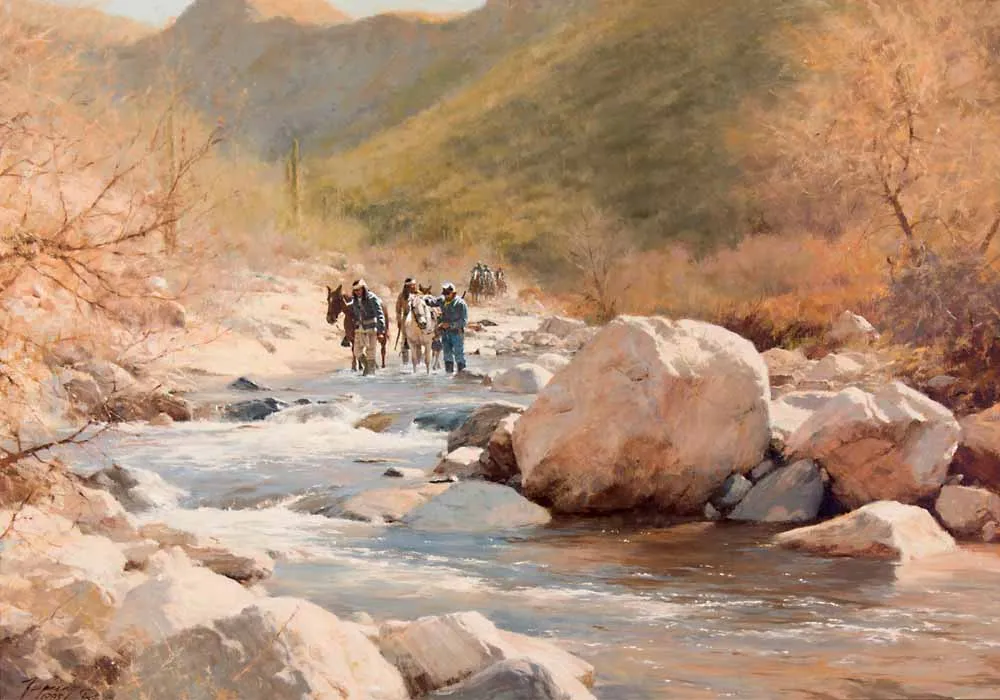
Scout from Fort Bowie
MEDIUM: Oil on canvas
DIMENSIONS: 28 x 40 inches
Signed/CA and dated 1985 lower left
Signed and titled verso
SHIPPING DIMENSIONS: 39 x 51 x 3 inches - 35 lbs.
SOLD FOR: $240,000.00
Including Buyers Premium
Additional Information
Provenance:
Scottsdale Art Auction, Scottsdale, AZ, 2015
Private collection, Arizona
Exhibited:
Thomas Gilcrease Institute of American History and Art May 3, 1985-July 7, 1985
Painted in 1985, Howard Terpning’s Scout from Fort Bowie reflects the artist’s detailed research and commitment to historical accuracy. Built in eastern Arizona in 1862, Fort Bowie was meant to protect Apache Pass and Apache Spring, a vital source of water in the region, from Chiricahua Apache fighters who were active in the area. After the surrender of Geronimo in 1886, the fort was abandoned in 1894. In Terpning’s painting, an Apache scout and soldier wade through the spring, possibly tracking fighters who have fled in the water to hide their tracks. The scenery is unmistakably Arizona, which the Tucson-based artist had easy access to from his studio two hours to the west.
Terpning is no stranger to soldiers and their duty in the face of opposition. The artist, before he was an illustrator, served as a Marine in the Pacific Theater in the final months of World War II. Later, in 1967, he volunteered to be a combat artist in Vietnam, where he saw fierce jungle fighting. “Being in the center of such chaos was another bitter experience as suffering, relieved by moments of kindness and valor, were etched into his memory never to leave,” writes Harley Brown in Howard Terpning: Tribute to the Plains People. “As Howard recalls some incidents, he closes his eyes and goes silent. He’s carried indelible events for many years and we can see that much of his compassion, strength and vulnerability of those memories were released into the soul of his paintings.”