Edgar Payne
1883-1947
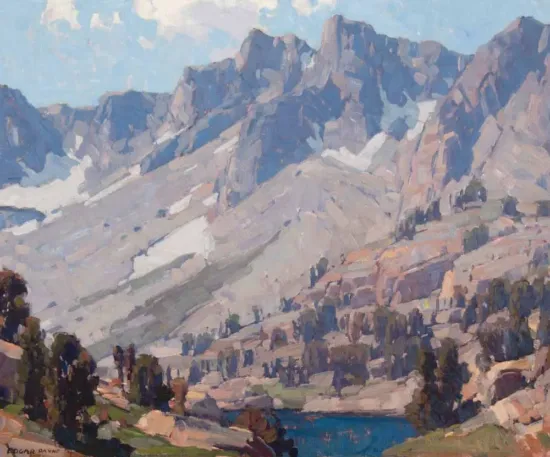
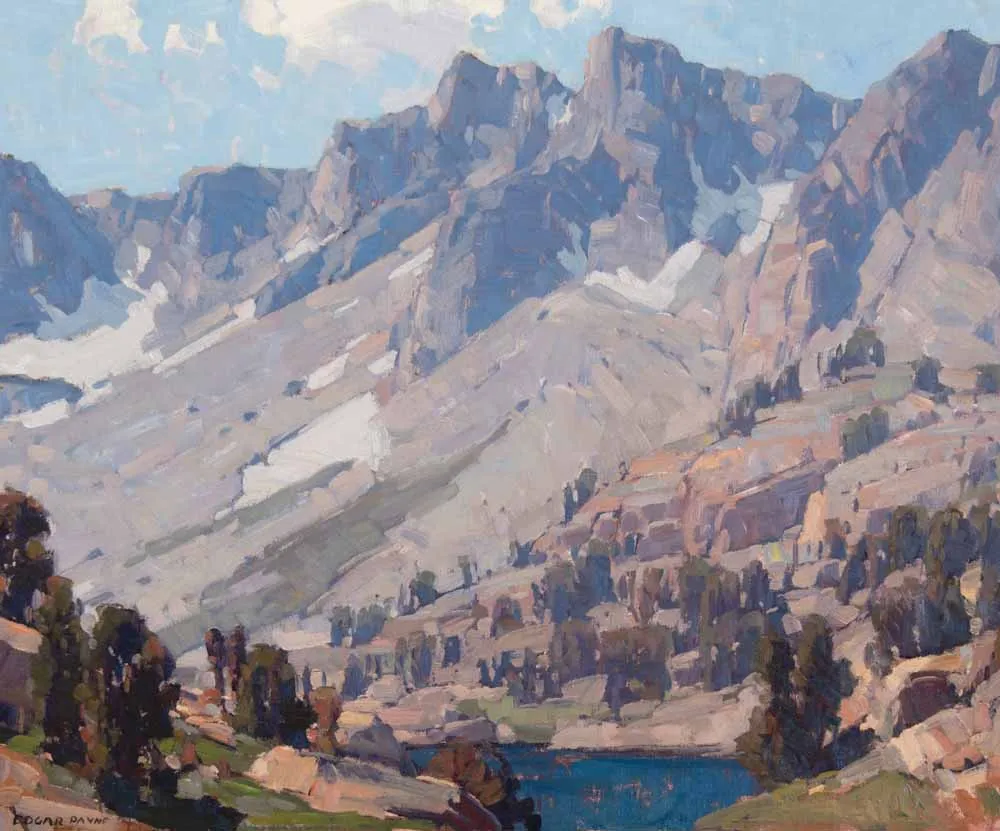
Rugged Peaks – Sierra
MEDIUM: Oil on canvas
DIMENSIONS: 28 x 34 1/8 inches
Signed lower left
SHIPPING DIMENSIONS: 38 x 44 inches
SOLD FOR: $57,000.00
Including Buyers Premium

2026 - APRIL,
LOT 299
1883-1947
MEDIUM: Oil on canvas
DIMENSIONS: 28 x 34 1/8 inches
Signed lower left
SHIPPING DIMENSIONS: 38 x 44 inches
SOLD FOR: $57,000.00
Including Buyers Premium
Provenance:
Private collection, California
Early in his career, Edgar Payne made every attempt to avoid the quintessential California subjects of Yosemite Valley, Mount Shasta and Mount Tamalpais. Fearing those settings were overused, the artist yearned for a new destination that was both grand and largely unexplored—he desired the “feeling of communion with nature,” he wrote. Sometime around 1918, Payne made his artistic discovery with the Sierra Nevada mountain range, which culminated in a deluge of Sierra Nevada paintings in 1921. One of the images from these journeys into nature was Rugged Peaks - Sierra. Payne painted these mountain locations because they were exceptional subjects, but also out of a sense of preservation, as encroaching development threatened pristine views, something he saw firsthand in the Swiss Alps.
“Payne, therefore, like other artists, aimed to preserve what he could of California’s beauty—on canvas if not in reality. The Sierra scenes that he chose to depict were thus an escape from industrialization, development and a burgeoning population,” wrote Scott A. Shields in Edgar Payne: The Scenic Journey. “He portrayed not California’s rapidly changing built environment but the unpopulated and untrammeled Eden of pure nature and wilderness. He also tried to live his aesthetic by communing with nature as often as possible. He was certainly not alone in this, for Californians, more than residents of any other state in the nation, enjoyed a special bond with the outdoors and embraced nature and its healthful attributes as never before…[Payne] depicted the highest locales with the clearest water, the most unblemished terrain, and the purest, most ultracrystalline light as it he were recording these settings for posterity.”