Frank McCarthy
1924-2002
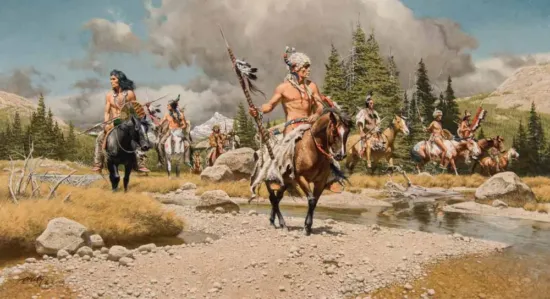
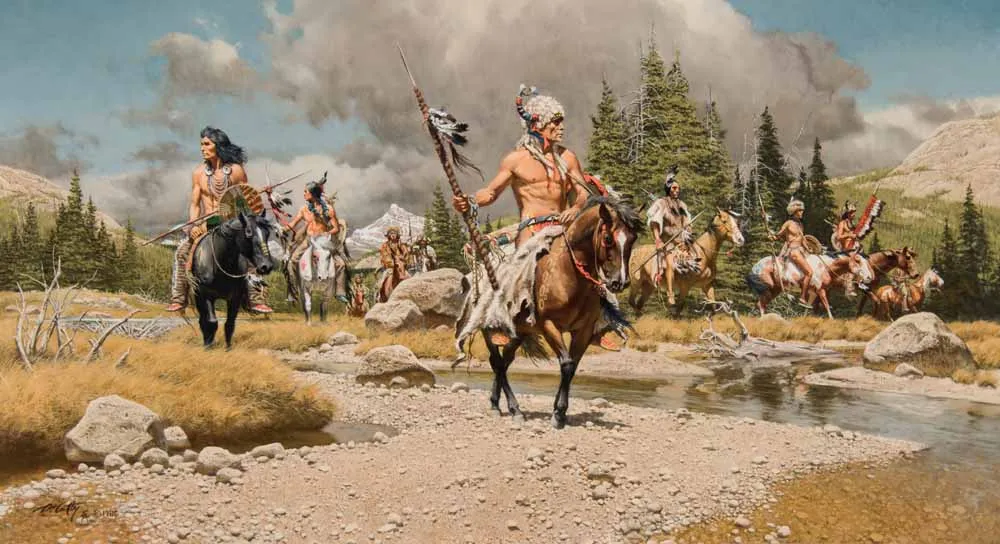
In The Land of the Soaring Eagles
MEDIUM: Oil on canvas
DIMENSIONS: 22 x 40 inches
Signed Lower Left and dated 1988 CA
Titled, signed and dated verso
SHIPPING DIMENSIONS: 32 x 50 inches
SOLD FOR: $45,000.00
Including Buyers Premium
Additional Information
Provenance:
Private collection, Michigan circa 1980s
Known for painting exceptional detail—including anatomy and muscle, rocks, vegetation, water and clouds—and thrilling, high-stakes action, Frank McCarthy came to the West after working in illustration, notably as a poster artist in Hollywood. For those works, McCarthy could amplify the drama and tension, creating explosive pictures of soldiers, spies and outlaws. When the artist turned to Western subjects in 1973, he dialed the action down a little, and yet he still retained much of his narrative edge. Among his favorite new subjects were the Plains Indians. “We still see him today in the collective memory of our national folklore: the proud, bold, graceful warrior-hunter on horseback, the Plains Indian in brilliant panoply of paint and feathers, shouting a blood cry as he charges headlong against his enemy,” Elmer Kelton wrote in The Art of Frank C. McCarthy. “We see him as a mystic soul living close to nature, moving his tepee villages at will to follow the migrations of the buffalo, the life-giving rains, the greening grass, and leaving the land as he found it. The image is real. It flourished during a brief and colorful period in the American past. It is a favorite image of painter Frank McCarthy, whose works evoke its spectacle and drama, its heroism and its tragedy.”