Unknown Artist
1907-1989
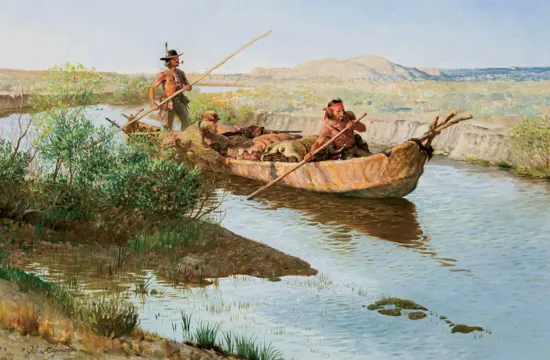
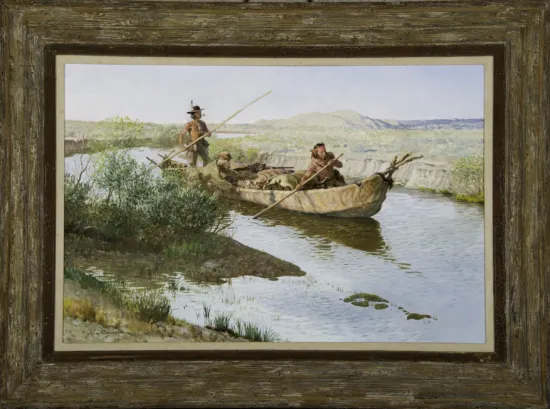
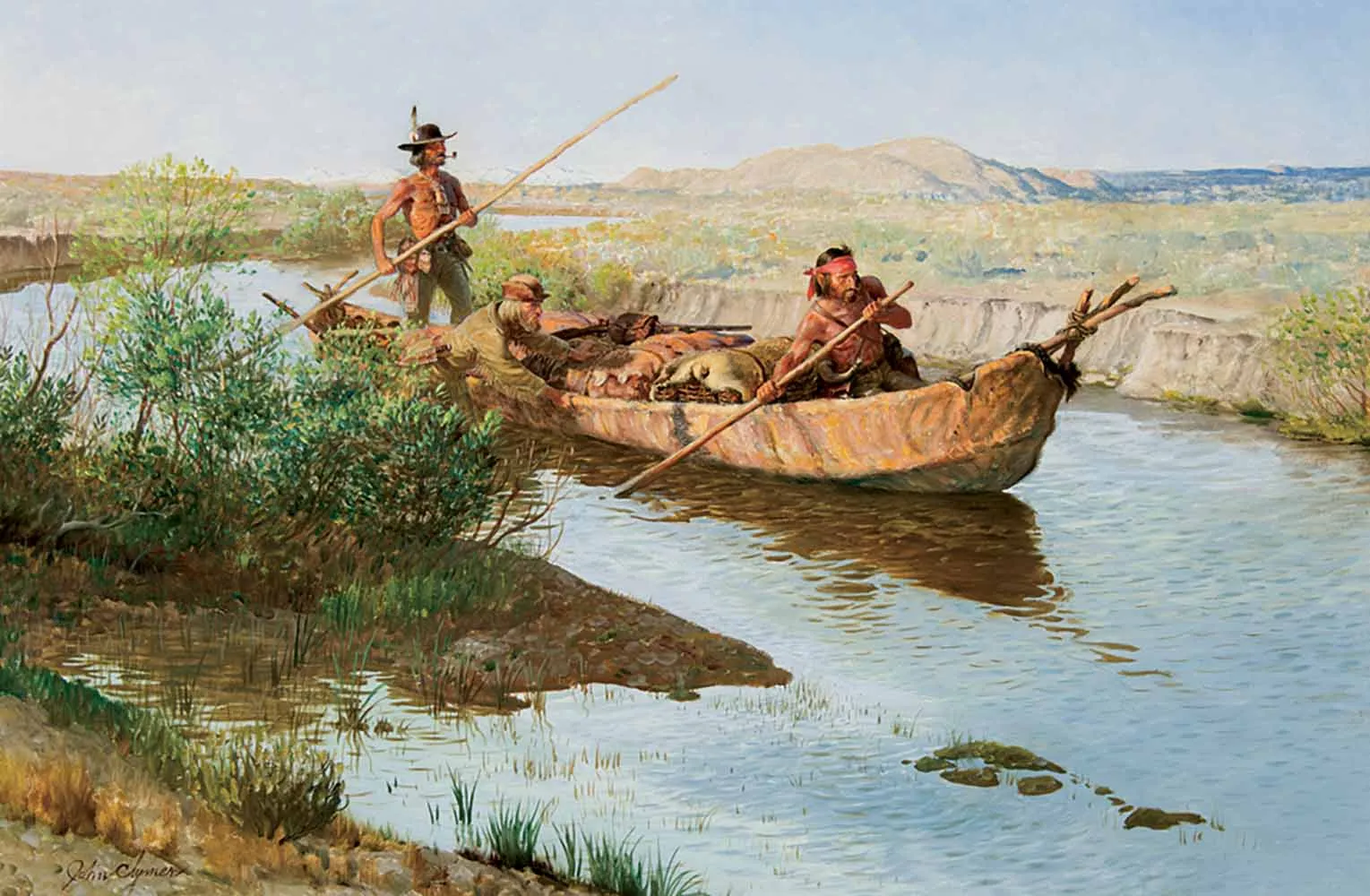
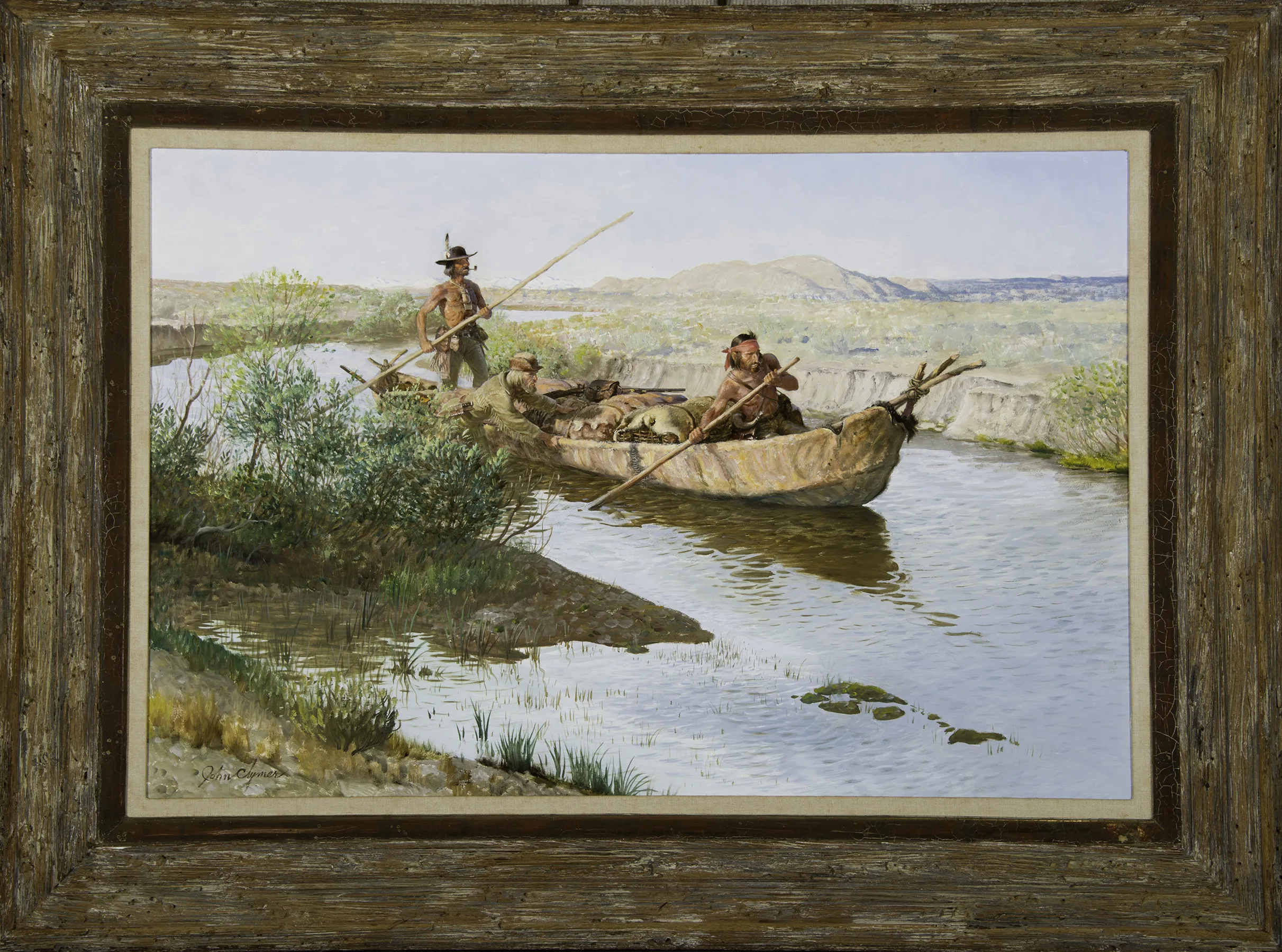
Trading Down the Sweetwater
MEDIUM: Oil on board
DIMENSIONS: 24 x 36 inches
Signed lower left
SHIPPING DIMENSIONS: 35 x 47 inches
SOLD FOR: $292,500.00
Including Buyers Premium

2024 - APRIL,
LOT 288
1907-1989
MEDIUM: Oil on board
DIMENSIONS: 24 x 36 inches
Signed lower left
SHIPPING DIMENSIONS: 35 x 47 inches
SOLD FOR: $292,500.00
Including Buyers Premium
Provenance:
Grand Central Art Galleries, New York, NY, August 1968
Private collection, Tulsa, OK, 1977
Rivers play a vital role in many of John Clymer’s greatest works. As a man of history and a voracious reader, Clymer saw the waterways of the frontier as the lifeblood of the American West prior to the arrival of the great railroads. Lewis & Clark, George Catlin, Karl Bodmer’s expedition with Prince Maximillian, traders in overloaded flat boats, fur trappers during the 1600s and 1700s—all had relied on rivers to navigate their way around the West. Trading Down the Sweetwater is a stunning example of his fascination with the rivers of the West. In this case, the Sweetwater River is a tributary of Wyoming’s North Platte River.
Clymer was also fond of the Missouri River, which played a significant role in establishing travel and trade in the West. In the summer of 1966, Clymer and his wife floated down the Missouri River on an outboard-powered, pontoon platform boat called The Chief. “It carried us for four days, 144 miles downriver, during which time we camped out at night and often stopped along the shore to explore,” Clymer wrote in John Clymer: An Artist’s Rendezvous with the Frontier West. “Our route passed through the white cliff area so vividly described by Lewis and Clark and other early and later-day travelers on the river. It was also the subject for several of Karl Bodmer’s paintings. Along this section of the river are old Indian campsites and buffalo jumps, Lewis and Clark campsites, sites of old forts and military posts, and well-known rapids and bars where early-day steamboat wrecks occurred. This section of the river winds through an area where great buffalo herds once roamed. In the days before the settlers there were also large numbers of deer, elk, prairie wolf, mountain sheep, antelope and the formidable grizzly bear described by Lewis and Clark. I was inspired to do a number of historical paintings based on our exploration of that area.”