

G. Harvey
1933-2017
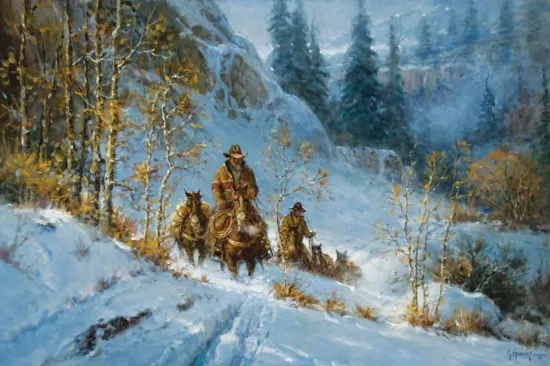
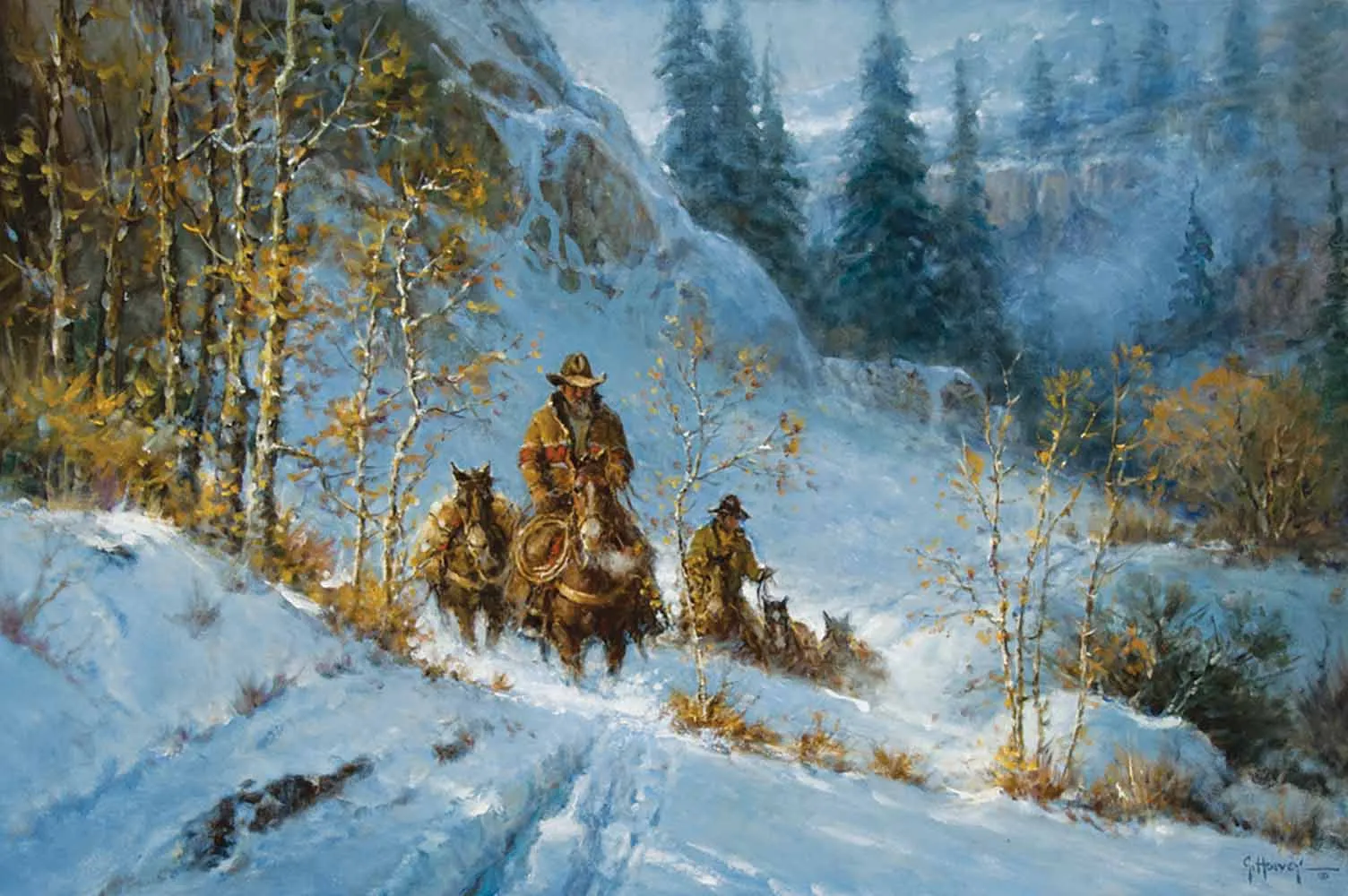
Tracks Below the Rim
MEDIUM: Oil on canvas
DIMENSIONS: 24 x 36 inches
Signed lower right
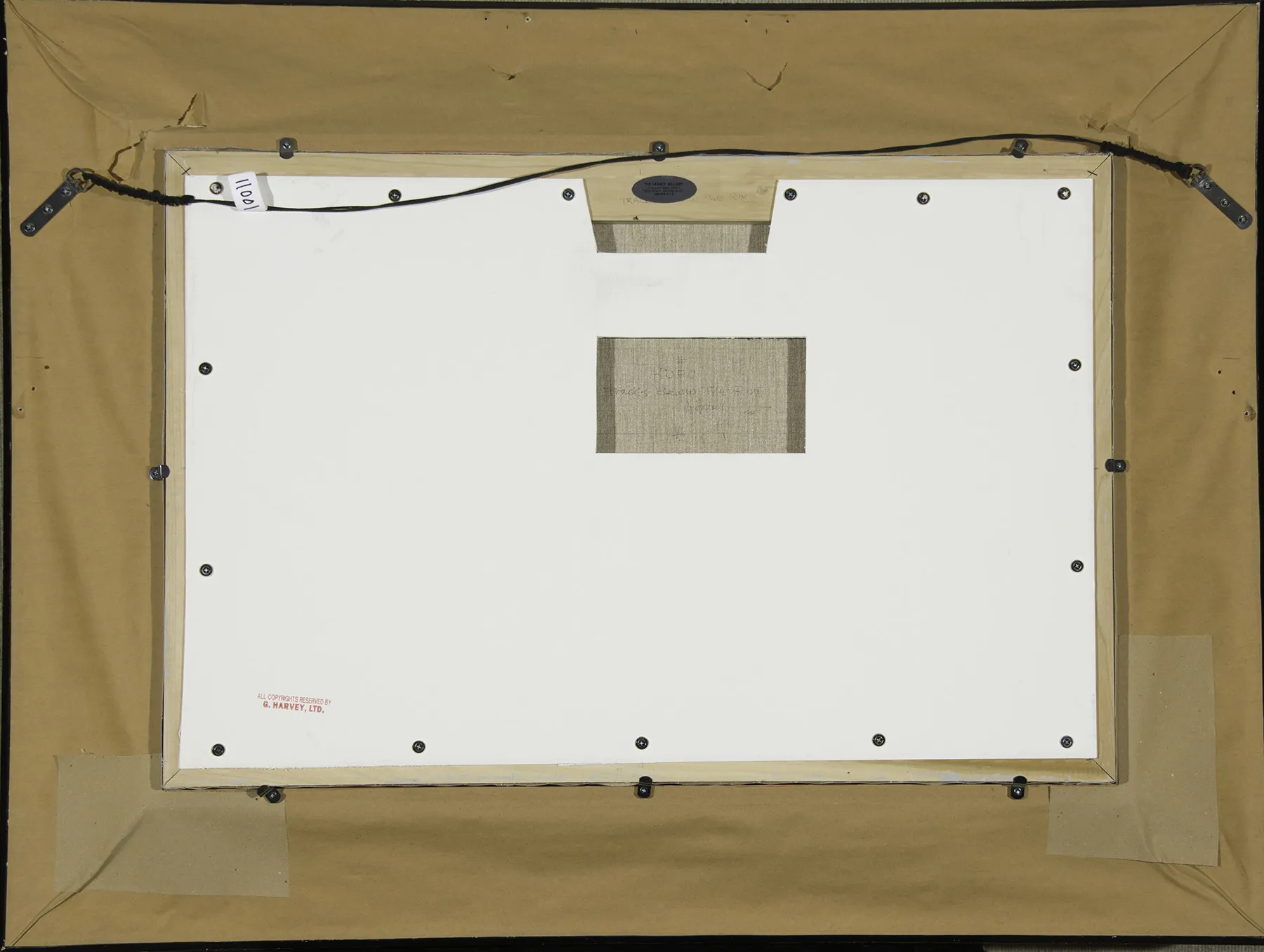
Signed and titled verso
SHIPPING DIMENSIONS: 37 x 49 x 5 inches
SOLD FOR: $140,400.00
Including Buyers Premium

2024 - APRIL,
LOT 275
1933-2017
MEDIUM: Oil on canvas
DIMENSIONS: 24 x 36 inches
Signed lower right
Signed and titled verso
SHIPPING DIMENSIONS: 37 x 49 x 5 inches
SOLD FOR: $140,400.00
Including Buyers Premium
Provenance:
Legacy Gallery, Scottsdale, AZ, 2008
Private collection, Nebraska
Texas painter G. Harvey’s artwork focuses on a period of transition, in more ways than one—the transition between day and night, work and rest, autumn and winter, or the transition between periods in history, like when the horse and buggy were replaced by early automobiles. This push-pull dynamic sets up a clash between the way things were and the way they are now. In Tracks Below the Rim, Harvey uses sunlight and shadow to show the transition of time and place, with the riders getting closer to warmth and light, and further from cold and darkness.
“G. Harvey believes the West, more than any other part of the country, is a state of mind—an independence. He admires the qualities embodied in frontier families, the commitment of a handshake, and an outward toughness but inner gentleness. He saw these characteristics in his own father and, from him, learned that self-reliance and adversity build character,” writes Randy Best in G. Harvey: The Golden Era — The American Dream. “Together, they walked dry riverbeds and searched ancient campsites for the relics of talented hands that shaped tools and weapons. In his paintings, he crosses rivers and the barriers of time. He has painted the same campsites filled with lodges and unshod horses grazing in meadows which adorned the margins of sacred hunting grounds.”